Academic discourse often privileges the urban as the dominant model of human settlement, casting the rural as its lesser opposite—less dense, less developed, and seemingly less relevant. However, rural areas are deeply integrated into global systems of capital, labor, and infrastructure, making them far from peripheral.
Despite this, rurality remains heavily stereotyped: romanticized as simple and authentic, or dismissed as backward and out of step with modernity. These views frame the rural as the "Other" of progress. Yet, this perceived "out-of-sync" quality might actually offer resistance to dominant systems—providing space for alternative ways of living, working, and relating to the environment.
Rather than untouched, the rural is a space of active cultivation and human–nonhuman interaction, making it vital for reimagining more just and sustainable ways of cohabiting on the planet.
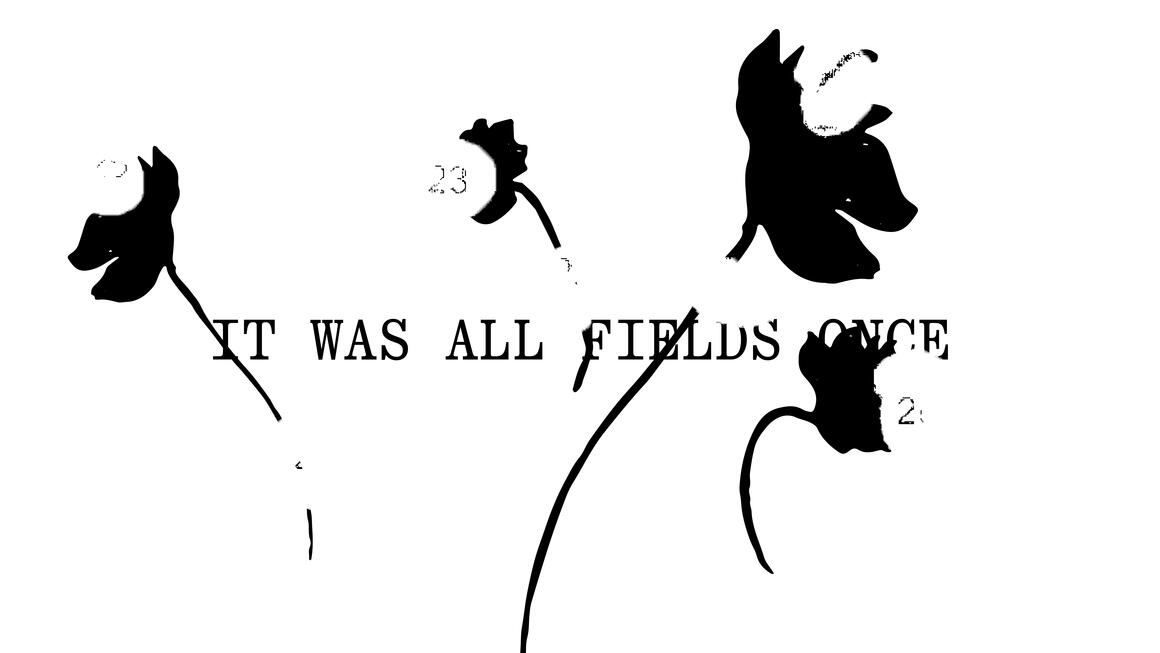
IT WAS ALL FIELDS ONCE is both an exploration and an invitation. It brings together spatial practices, research, and artistic perspectives that unsettle the urban-rural binary and trace the rural where it is least expected, even within the city itself. Rather than fixating on the rural as a place, the exhibition approaches it as a condition: shaped by memory, migration, ecology, labour, and desire. It focuses on practices, relationships, rituals, and traditions, all ready to be rediscovered, reinterpreted, and reinvented.
This marks the beginning of a growing collection of perspectives on rurality, not as something lost or in need of preservation, but as a dynamic force full of potential.
The exhibition unfolds across two complementary venues: CIVA and TRACK. CIVA begins to assemble an archive of rural practices, rituals, and artefacts, primarily gathered during the project New Ruralities or NERU, a three-year collaboration among six European academic institutions funded by the Erasmus+ programme. TRACK expands and reimagines these through an artistic lens. Situated at a train station that physically and symbolically connects city and countryside, TRACK becomes a threshold: an in-between space that brings rurality into the urban and explores its transformative potential.
